

“Liver detox” is one of the most searched wellness phrases in the world, yet it means very different things depending on who you ask. For many people, it refers to a short reset: fewer processed foods, less alcohol, more hydration, and a return to routine. For others, it means liver detox supplements, liver cleanse supplements, or a strict program with detox drinks and pills.
If you are considering any detox plan, it helps to know what liver detox side effects can look like, which detox symptoms may be expected during dietary changes, and most importantly, when to stop detox and seek medical care. At Siam Clinic, our approach is simple: support the body safely, avoid exaggerated claims, and tailor recommendations to your health profile and travel schedule.
Anyone looking for a trusted wellness clinic in Phuket may also explore hydration support options at Siam Clinic.
→ IV Drip Service
First, a reality check: your liver already “detoxes” every day
Your liver is part of a highly efficient system that processes nutrients, metabolizes alcohol, helps manage hormones, and converts substances into forms the body can excrete. Most people do not need extreme cleansing plans. What many people feel during a “detox” is often the body responding to changes such as:
- Reduced calories or carbohydrates
- Caffeine withdrawal
- Dehydration, especially in hot climates
- Sudden increases in fiber
- Changes in salt intake and sleep schedule
A clear, evidence-based overview of detox and cleanse claims is summarized here:
Read the evidence summary on detoxes and cleanses
Common “detox symptoms” that can be normal
Not every uncomfortable feeling is a sign of danger. Many mild symptoms are linked to routine changes rather than toxins “leaving the body.”
1) Headache (often from caffeine or dehydration)
If you reduce coffee, energy drinks, or alcohol quickly, headaches may occur for a day or two. In tropical climates like Thailand, dehydration can happen faster than visitors expect, especially after beach time, outdoor activities, or long walks in humid weather.
What may help improve comfort
- Increase water intake steadily throughout the day
- Add oral rehydration salts if you are sweating heavily
- Keep meals consistent rather than skipping them
2) Fatigue or low energy
Lower calories, less sugar, and disrupted sleep can make you feel tired. If your detox plan is extremely low calorie, fatigue may be more noticeable.
What’s reasonable
- Mild fatigue for 24 to 72 hours as your routine shifts
- Feeling “flat” if you are undereating protein and complex carbs
What’s not ideal
- Extreme weakness or dizziness that interferes with daily activities
3) Digestive changes (bloating, gas, looser stools or constipation)
Many detox programs increase fiber suddenly through vegetables, fruit, juices, or powders. Your gut may need time to adapt.
Typical patterns
- Bloating or gas for a few days
- Changes in stool frequency
- Mild cramping that improves after bowel movement
Tip
Increase fiber gradually and pair it with enough water.
4) Mood changes or irritability
Reducing caffeine, alcohol, and sugar can affect mood temporarily. This is common and usually settles as sleep and meal timing stabilize.
5) Skin breakouts
Some people notice acne flare-ups when sleep, hormones, or diet changes quickly. This is not a reliable “detox sign.” If breakouts persist, it may help to review skincare, stress levels, and nutrition rather than blaming toxins.
Liver detox vs supplements: where side effects can become risky
The phrase “liver cleanse” often implies pills, teas, powders, or concentrated herbal extracts. This is where liver cleanse side effects can be more unpredictable, because supplements vary widely in:
- Ingredient concentrations
- Quality control and purity
- Contamination or adulteration risks
- Potential interactions with medications and alcohol
A clinically oriented resource on liver injury linked to herbal and dietary supplements can be found here:
Medical reference on herbal and dietary supplement related liver injury
Why supplements can cause “detox side effects” that are not detox at all
Some symptoms are actually adverse reactions. Examples include:
- Nausea or vomiting after starting a new supplement
- Itching, rash, or facial swelling (possible allergy)
- Palpitations, anxiety, or insomnia from stimulants
- Worsening reflux or stomach irritation
- Diarrhea from laxative herbs
Even “natural” does not always mean “gentle.” Results vary by individual, and risk increases if you combine multiple products.
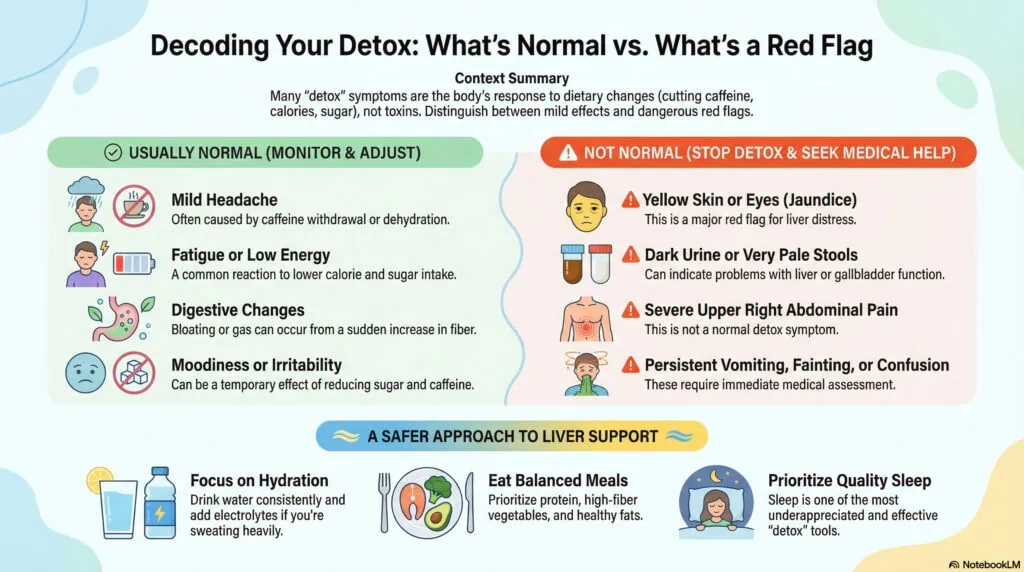
What is normal vs not normal: a simple guide
Usually normal (monitor, adjust your plan)
These can happen during a short reset diet and often improve with hydration and adequate food:
- Mild headache
- Mild fatigue
- Mild bloating or gas
- Temporary constipation or looser stools
- Mild irritability
- Slight change in sleep for a few nights
If symptoms are mild, you can support recovery by eating balanced meals, maintaining hydration, and avoiding extreme restrictions.
Not normal (stop detox and seek medical assessment)
These are red flags. They may indicate dehydration, electrolyte imbalance, infection, liver inflammation, gallbladder issues, or other medical conditions unrelated to “detox.”
Stop the program and seek medical help if you notice
- Yellowing of skin or eyes
- Dark urine or very pale stools
- Severe right upper abdominal pain
- Persistent vomiting, inability to keep fluids down
- Confusion, fainting, severe weakness
- Shortness of breath, chest pain, or rapid heartbeat
- High fever or severe body aches
- Severe rash or swelling of lips/face
This is the practical meaning of when to stop detox: any symptom that is severe, worsening, or suggests liver stress should not be waited out.
Who should be extra cautious before any detox plan
Even a “gentle” cleanse may not be appropriate for everyone. Consider medical advice first if you have:
- Known liver disease or abnormal liver enzymes
- Kidney disease
- Diabetes or a history of low blood sugar
- Pregnancy or breastfeeding
- A history of eating disorders
- Regular medication use, including blood thinners or seizure medicines
- Heavy alcohol intake or frequent hangovers
At Siam Clinic, we often recommend a simple screening approach before any detox-style program: review symptoms, medication history, and consider basic lab checks if appropriate.
→ Liver Cleansing
A safer “liver support” approach that beats capsules alone
If your goal is to feel lighter, clearer, and more energetic, the most reliable approach is rarely an aggressive supplement stack. Instead, focus on what supports the liver’s everyday function.
1) Hydration that matches your climate and activity
In Phuket, hot weather and humidity can amplify dehydration. Add alcohol or long beach days and the effect can be stronger. Hydration can support energy, digestion, and recovery.
- Water throughout the day
- Electrolytes if you sweat heavily
- Limit alcohol during your reset window
2) Food that supports metabolic balance
A balanced plate often works better than extreme rules:
- Protein at each meal
- High fiber vegetables and whole foods
- Healthy fats in sensible portions
- Minimize ultra-processed foods and excess sugar
3) Sleep and stress support
Sleep is one of the most underappreciated detox tools. Poor sleep can worsen cravings, appetite signals, and inflammation markers.
4) If you use supplements, keep it simple and supervised
If you choose liver detox supplements, consider a “less is more” rule:
- Use one product at a time, not five
- Avoid high dose combinations unless advised
- Stop immediately if symptoms appear
- Buy from reputable sources with clear labeling
5) Medical support options for travelers
Whether someone is recovering from a long-haul flight from Europe or a late night out in Phuket, some people prefer medical-grade wellness support rather than experimenting with pills. Under medical supervision, IV hydration and selected nutrients may help improve hydration status and can support recovery when used appropriately. Results vary by individual and depend on baseline health.
If you are curious about structured recovery options, Siam Clinic can advise which approach may suit your schedule and symptoms.
→ NAD+ Wellness
Travel timing: when to schedule a detox style reset in Phuket
If you are visiting Phuket, timing matters. A plan that feels fine at home can feel harsher in a tropical setting.
A travel-friendly approach
- Do not start a strict detox on the day you land
- Prioritize hydration and sleep on day one
- Keep meals regular for 48 hours before trying any dietary shift
- Avoid intense sauna use or extreme fasting in the heat
- If you plan aesthetic treatments, avoid anything that increases bruising risk such as alcohol and severe dehydration
FAQ
1) Are liver detox side effects a sign the detox is working?
Not necessarily. Many detox symptoms are caused by changes in caffeine, calories, hydration, or fiber. Feeling unwell is not proof of toxin removal.
2) How long do detox symptoms usually last?
Mild symptoms often settle within a few days, especially when hydration and balanced meals are maintained. If symptoms worsen or continue beyond a week, it may be worth reassessing the plan.
3) Can liver cleanse supplements damage the liver?
Some supplements have been linked to liver irritation or injury in rare cases. Risk varies by ingredient, dose, product quality, and individual factors. Stop immediately if you develop red-flag symptoms such as jaundice or dark urine.
4) When should I stop detox immediately?
Stop if you experience severe symptoms, persistent vomiting, fainting, confusion, yellowing of skin or eyes, dark urine, pale stools, or severe abdominal pain. These are not typical detox side effects.
5) What is a safer alternative to detox pills?
A simple, consistent routine often beats capsules alone: hydration, balanced meals, reduced alcohol, and sleep. If you want structured support, a clinic-guided plan with medical screening may be safer.
6) Can IV therapy replace a healthy lifestyle?
No. IV support may help improve hydration and can support recovery in specific situations, but it does not replace nutrition, sleep, and long-term habits.
A calm next step, with medical guidance
Detox can mean many things. If your plan relies heavily on pills or extreme restriction, side effects are more likely and may be harder to interpret. A safer approach focuses on hydration, steady nutrition, and medical screening when needed.
If you are visiting Phuket and would like personalized wellness guidance during your stay, the medical team at Siam Clinic is here to help you choose an approach that matches your body, your travel pace, and your safety first.
Recommended Next Reads
- Liver Detoxification Explained What Works and What Doesn’t
- Glutathione & Liver Detoxification: What the Research Suggests
- Detox Myths vs Reality: What Beats Capsules Alone?
Sources
- https://www.nccih.nih.gov/health/detoxes-and-cleanses-what-you-need-to-know
- https://www.ncbi.nlm.nih.gov/books/NBK548441/
- https://www.hopkinsmedicine.org/health/wellness-and-prevention/detoxing-your-liver-fact-versus-fiction
- https://www.fda.gov/food/alerts-advisories-safety-information/fda-issues-warning-about-certain-supplements-substituted-toxic-yellow-oleander
Written by: Siam Clinic Editorial Team
Last updated: 16 January 2025
Medical Disclaimer
- This article is intended for educational and informational purposes only.
- It does not replace personalised medical advice, diagnosis, or treatment.
- Clinical decisions should always be made in consultation with a qualified healthcare professional.
Learn more about how we create and maintain medical content:
Medical Content Policy
Contact Siam Clinic Phuket
- phone : 088-488-6718 and 093-692-5999
- Email : info@siamclinicphuket.com
- Facebook inbox : https://m.me/siamclinicthailand
- Instagram : https://www.instagram.com/siamclinic
- Whatsapp : https://whatsapp.com


