
A “detox” can mean many things, from a few days of cleaner eating to a more structured liver cleanse plan using supplements, teas, or restrictive diets. Whatever your version looks like, the part that often gets overlooked is liver detox aftercare: what you do right after the cleanse that helps your body return to a steady, sustainable rhythm.
At Siam Clinic, we see many travelers who start a detox after long flights, late nights, or weeks of restaurant meals. In a tropical destination like Phuket, heat and humidity can amplify dehydration, fatigue, and digestive sensitivity, so smart aftercare matters just as much as the detox itself. If you’re unsure what’s normal and what’s not, it’s worth taking a more medically grounded approach.
First, a reality check: what “detox” can and cannot do
Your liver and kidneys are already built to process and clear many substances. Many popular detox programs have limited clinical evidence, and some can create avoidable side effects, especially if they are extreme or poorly planned.
That does not mean every reset is useless. A short period of improved hydration, lighter meals, and reduced alcohol intake may help improve energy and digestion for some people. But the benefits usually come from supportive habits, not from “flushing toxins” overnight.
After liver cleanse routines should focus on:
- Hydration and electrolytes
- Gentle nutrition that supports recovery
- A safe reintroduction of caffeine, alcohol, and exercise
- Avoiding risky supplement stacking
The 48-hour rule: what to do right after detox
Think of the first two days as your “stabilization window.” The goal is to reduce stress on digestion and avoid abrupt swings in blood sugar, caffeine, alcohol, and training.
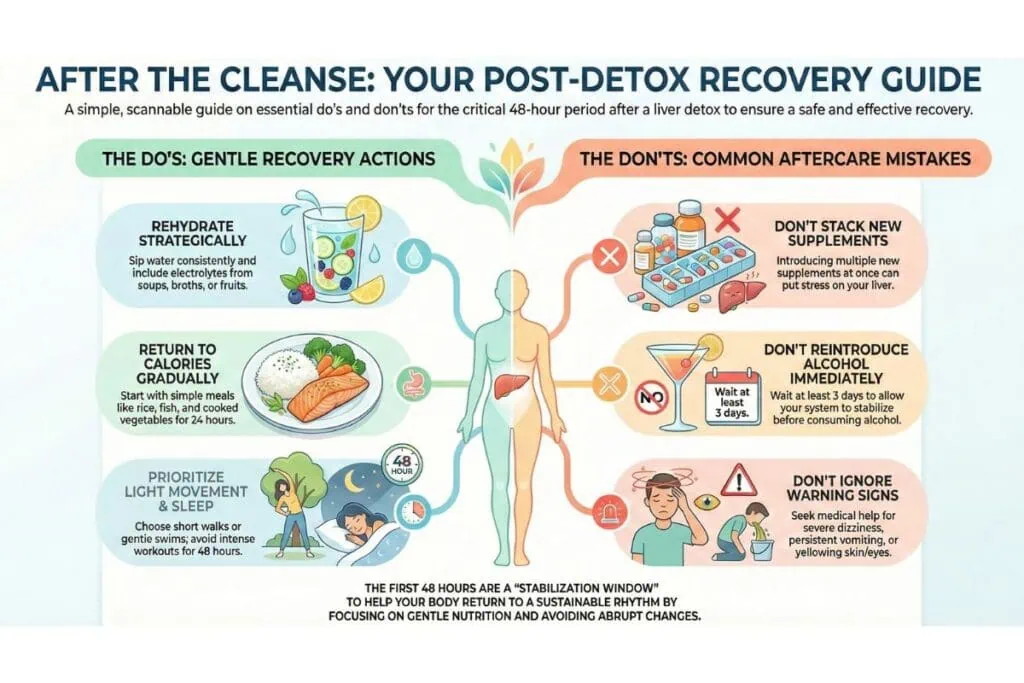
Do: rehydrate strategically
If your detox involved low calories, diuretic teas, sauna sessions, or minimal salt, you may be relatively depleted.
Better approach
- Sip water consistently rather than “chugging” large volumes
- Include electrolytes from food (soups, broths, fruits) or a balanced oral electrolyte solution
- Watch signs of dehydration: headache, dark urine, dizziness, rapid pulse, unusual fatigue
In Phuket’s climate, you may lose more fluid through sweat without noticing, especially if you’re walking outdoors or spending time at the beach.
Do: return to normal calories gradually
A common mistake is to “celebrate” with a heavy meal right away. After restrictive intake, your gut can be more sensitive.
A gentle refeed looks like
- Day 1: simple meals (rice, oats, eggs, fish, tofu, soups, cooked vegetables)
- Day 2: add fiber and healthy fats gradually (nuts, olive oil, avocado)
- Day 3 onward: return to your usual balanced meals
Do: prioritize sleep and light movement
A short walk, gentle mobility work, or an easy swim can support circulation and mood. Skip intense workouts for 24 to 48 hours if you felt weak, lightheaded, or had digestive symptoms during the detox.
Don’ts that matter: the most common aftercare mistakes
Don’t: stack “liver detox supplements” immediately after
Some people finish a detox and then add multiple products: liver cleanse supplements, fat burners, herbal teas, and “metabolism boosters” all at once. That can be risky.
Herbal and dietary supplements can cause liver injury in some cases, especially multi-ingredient products or concentrated extracts.
Safer approach
- Introduce only one new supplement at a time
- Avoid high-dose, multi-ingredient blends unless supervised
- Stop and seek medical advice if you develop yellowing of eyes/skin, severe abdominal pain, persistent vomiting, or very dark urine
Don’t: treat headaches and nausea as proof it “worked”
Detox symptoms can be caused by dehydration, low calorie intake, caffeine withdrawal, or changes in sleep, not “toxins leaving your body.” If symptoms are intense, that is a sign to slow down, not push harder.
Don’t: jump back into alcohol right away
“Alcohol after detox” is one of the most searched questions for a reason. If your detox was meant to support liver wellness, returning to alcohol immediately often defeats the purpose.
Abstinence is strongly associated with improved outcomes in alcohol-related liver conditions, and even short breaks can be meaningful for many people.
Alcohol after detox: timing and a practical, safer plan
There is no universal rule, because people vary by body size, drinking habits, medical history, and baseline liver health. A realistic aftercare guideline is to treat alcohol like a gradual reintroduction, not an immediate return.
A practical timeline many people tolerate well
Day 0 to 3 after detox
- Prefer no alcohol
- Focus on hydration, food, sleep, and gentle activity
Day 4 to 7
- If you choose to drink, keep it light and infrequent
- Avoid binge patterns
- Eat beforehand and pace slowly
Beyond one week
- Decide what your “new normal” is
- Many people feel best with fewer drinking days per week and smaller amounts
If you have a history of liver disease, fatty liver, hepatitis, or abnormal liver tests, it’s wise to avoid alcohol or discuss personalized guidance with a clinician.
Useful public health information on alcohol-related risks is available via the National Institute on Alcohol Abuse and Alcoholism:NIAAA clinical resource on alcohol-related medical concerns
What to eat after detox: a liver-friendly plate without extremes
You do not need a “perfect” diet to support recovery. Aim for consistency.
Best foods to emphasize for the next 7 days
- Protein: fish, eggs, yogurt, tofu, lean poultry, legumes
Supports repair and stable blood sugar - Fiber: cooked vegetables, berries, oats, chia, brown rice
Supports digestion and regularity - Healthy fats: olive oil, nuts, seeds, avocado
Supports satiety and nutrient absorption - Fluids: water, soups, coconut water in moderation
Supports hydration and electrolyte balance
Foods and habits to limit short term
- Very high-fat fried meals (can feel heavy after restriction)
- Large sugar spikes (can worsen fatigue and cravings)
- Excess caffeine if you reduced it during detox
If you did a strict program, your appetite cues may feel off for a few days. That’s normal. Eat regularly, gently, and avoid using hunger as a test of willpower.
When to stop detox, even if you already finished
Some warning signs show up during detox, but they can also appear in the “after liver cleanse” window. If any of the below happen, do not ignore them.
Consider stopping and seeking medical evaluation if you have
- Fainting, severe dizziness, chest pain, shortness of breath
- Confusion, severe weakness, inability to keep fluids down
- Yellowing of eyes/skin, dark urine, pale stools
- Severe abdominal pain, persistent vomiting
- A rash, swelling, or signs of an allergic reaction
These can signal dehydration, electrolyte imbalance, infection, supplement reaction, or other conditions that need proper assessment.
Supportive options that may help without harsh detox tactics
If your goal is energy, digestion, glow, or recovery, a supportive plan often works better than aggressive cleanses.
A smarter “reset” approach
- Hydration plus electrolytes for 3 to 5 days
- Regular balanced meals with protein and fiber
- Reduce alcohol, especially binge patterns
- Sleep priority for 1 week
- Light movement daily
- Check basics if symptoms persist (iron status, vitamin D, glucose markers, liver enzymes)
When travelers arrive in Phuket after long-haul flights, dehydration and disrupted sleep can mimic “detox symptoms.” A calmer plan often leads to more comfortable results, and results vary by individual.
Mid-article note for readers exploring clinical wellness support: personalized assessments and nutrient strategies can be discussed with a medical team.
[Internal Link: NAD+ Article or Wellness Detail Page]
For general safety guidance on detoxes and cleanses, this evidence-based overview is worth reading:
NCCIH: Detoxes and cleanses, what you need to know
FAQ
1) What are the most common detox symptoms after a cleanse?
Fatigue, headache, constipation or loose stools, and irritability are commonly reported. These are often related to dehydration, low calorie intake, and caffeine or sugar withdrawal rather than “toxins leaving.” If symptoms are severe or persistent, medical review is recommended.
2) How long should I wait before drinking alcohol after detox?
Many people do best waiting at least 3 days, then reintroducing slowly if they choose to drink. If you have liver disease or abnormal liver tests, it’s safer to avoid alcohol and seek medical guidance.
3) Are liver detox supplements always safe?
Not always. Some herbal or multi-ingredient supplements have been linked to liver injury in susceptible individuals. Introduce one product at a time and stop if you develop concerning symptoms.
4) What should I eat after liver cleanse programs?
Aim for balanced meals with protein, fiber, and healthy fats. Simple, cooked foods can feel gentler in the first 24 to 48 hours. Hydration is key, especially in hot climates.
5) When should I worry about liver cleanse side effects?
Seek urgent evaluation for yellowing of eyes/skin, severe abdominal pain, persistent vomiting, confusion, fainting, or inability to keep fluids down.
Recommended Next Reads
- Liver Detoxification Explained What Works and What Doesn’t
- Side Effects of Liver Detoxification: What’s Normal, What’s Not
- Glutathione & Liver Detoxification: What the Research Suggests
A soft next step with Siam Clinic
If you are visiting Phuket and want a safer, more personalized way to support wellness after a detox, the medical team at Siam Clinic can help you review your goals, lifestyle, and any symptoms you are experiencing. A thoughtful plan may help improve comfort and consistency, without extreme restrictions.
Written by: Siam Clinic Editorial Team
Last updated: 20 January 2025
Medical Disclaimer
- This article is intended for educational and informational purposes only.
- It does not replace personalised medical advice, diagnosis, or treatment.
- Clinical decisions should always be made in consultation with a qualified healthcare professional.
Learn more about how we create and maintain medical content:
Medical Content Policy
Sources
- NCCIH: “Detoxes” and “Cleanses” What You Need To Know
- NIAAA: Medical complications and alcohol-related concerns
- LiverTox (NCBI Bookshelf): Herbal and Dietary Supplements
- NIH PMC: Liver injury from herbal and dietary supplements
Contact Siam Clinic Phuket
- phone : 088-488-6718 and 093-692-5999
- Email : info@siamclinicphuket.com
- Facebook inbox : https://m.me/siamclinicthailand
- Instagram : https://www.instagram.com/siamclinic
- Whatsapp : https://whatsapp.com