

Myers Cocktail IV is often described as an intravenous blend of vitamins and minerals designed to support hydration, energy metabolism, and recovery. At Siam Clinic, we see many travelers interested in it for practical reasons: long-haul flights, tropical heat, late nights, or simply wanting to feel steadier while enjoying Phuket. The most important clinician’s perspective is this: IV micronutrients can be helpful in specific contexts, but they are not a “magic detox,” and they should be used thoughtfully, with medical screening and realistic expectations.
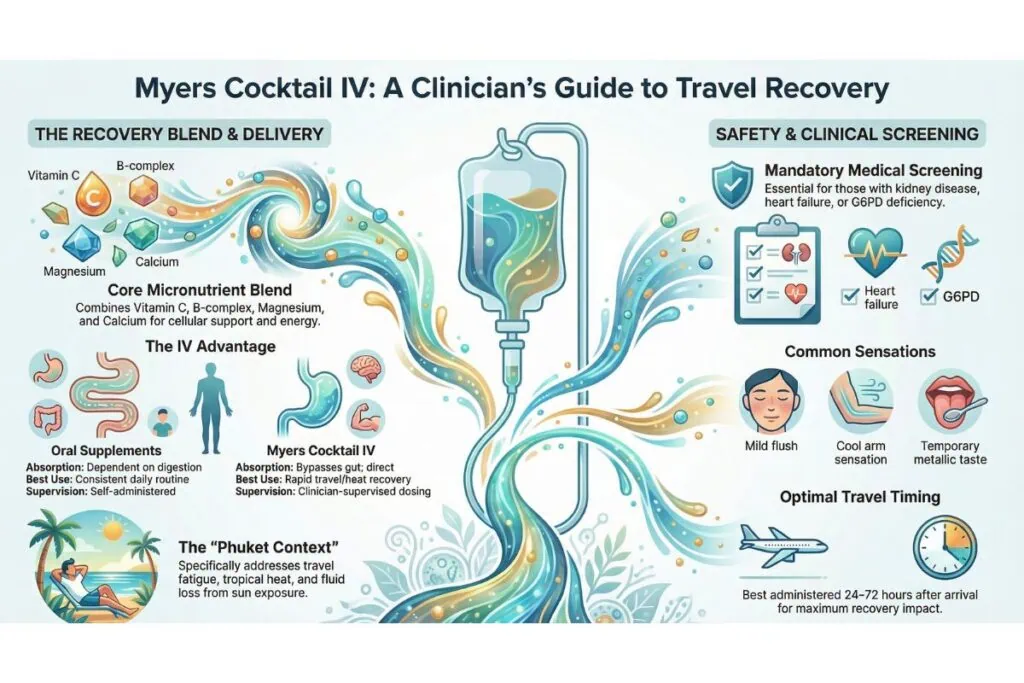
Early note for safety: if you have chronic kidney disease, a history of kidney stones, iron overload conditions, G6PD deficiency, significant heart disease, are pregnant, or take complex medications, you should speak with a clinician before any IV micronutrient therapy.
What exactly is a Myers Cocktail IV?
The original “Myers’ cocktail” concept is a micronutrient infusion that commonly includes:
- Vitamin C
- B-complex vitamins (often including thiamine, riboflavin, niacin, B6, and B12)
- Magnesium
- Calcium
- Sometimes trace nutrients, depending on protocols and patient needs
Formulas vary by clinic and country, and clinicians may adjust doses to account for body size, symptoms, diet, lab results, and safety factors. The goal is typically supportive care, not disease treatment.
Why IV instead of oral?
Oral supplements can be effective for many people, but absorption depends on digestion, timing, and tolerance. IV delivery bypasses the gut, which may be useful when someone is:
- Dehydrated or nauseated
- Having poor oral intake
- Recovering from travel-related fatigue
- Needing a controlled, clinician-supervised dose
That said, “IV” does not automatically mean “better.” It means different, and it comes with its own considerations.
The reality check: what the evidence does and does not say
A clinician’s honest view is that high-quality evidence for routine IV vitamin infusions in otherwise healthy people is limited. Reviews have noted that benefits are not clearly established for the general public without a documented deficiency or specific medical indication.
For a deeper evidence overview, see this PubMed-indexed review: PubMed
This does not mean nobody feels better afterward. Many people report improved wellbeing, often because IV therapy can combine hydration support with micronutrients, rest, and a structured recovery moment. But results vary by individual, and any perceived benefit may be influenced by baseline hydration, sleep debt, diet quality, alcohol intake, and stress levels.
Who might consider a Myers Cocktail IV?
At Siam Clinic, we frame it as a support option rather than a necessity. It may be considered for adults who:
- Struggle to hydrate well in hot climates
- Feel run-down after travel or long days outdoors
- Have frequent muscle tightness or cramps (where magnesium status and other factors matter)
- Have dietary patterns that make certain micronutrient gaps more likely
- Want clinician-guided wellness support while traveling
Who should be cautious or avoid it without medical clearance?
A careful clinician will slow down and assess risks when someone has:
- Kidney disease or reduced kidney function
- History of kidney stones (especially with higher vitamin C exposures)
- G6PD deficiency (high-dose vitamin C has been associated with hemolysis in susceptible individuals)
- Heart failure or conditions where fluid balance is delicate
- Electrolyte disorders (magnesium and calcium require careful dosing)
- Pregnancy or breastfeeding
- A history of significant allergic reactions to injectable therapies
- Current infection with fever, chest pain, severe shortness of breath, or neurological symptoms (these need medical evaluation, not wellness therapy)
What clinicians look for before recommending a Myers Cocktail IV
A premium, medically safe approach starts with fit and timing, not marketing.
1) Your goal (and what would be “good enough”)
Common goals we hear:
- “I want to feel less depleted.”
- “I’m recovering from travel.”
- “I want to support hydration and energy.”
Clinically, we translate this into: sleep, hydration status, nutrition, and whether there’s any red flag symptom that deserves evaluation first.
2) Your health background and medications
Some supplements can interact with medications or complicate certain conditions. A brief screening can prevent avoidable issues.
3) Your baseline hydration and recovery habits
If someone is sun-exposed, sweating heavily, or coming from a long flight, hydration alone may already make a meaningful difference. Micronutrients may support recovery, but they do not replace fluids, electrolytes, and rest.
What it feels like during the drip
Most people describe a calm, gradual experience. Sensations can include:
- A cool feeling in the arm
- A mild “flush” or warmth, especially with certain B vitamins
- Occasional lightheadedness if someone is dehydrated or the infusion runs too quickly
- A metallic taste (often reported with some vitamins/minerals)
Clinicians typically monitor comfort, adjust the drip speed, and encourage steady breathing and hydration afterward.
Safety and side effects: what’s common vs what’s not
Common, usually mild
- Temporary warmth or flushing
- Mild headache
- Nausea if you arrive dehydrated or haven’t eaten
- Bruising or tenderness at the IV site
- Feeling tired afterward (especially if you were already depleted)
Less common but important to recognize
- Significant dizziness, chest discomfort, or palpitations
- Rash, swelling, wheezing, or throat tightness (possible allergic reaction)
- Persistent pain, redness, warmth, or swelling at the IV site (possible irritation or infection)
- Severe headache, confusion, weakness, or unusual symptoms
High-dose IV vitamin C has been associated in some contexts with kidney-related risks, particularly in people with renal impairment, because vitamin C metabolism can increase oxalate load. This is one reason clinicians screen carefully and individualize dosing. PLOS One review on IV vitamin C use and adverse effects
If something feels “off,” the safest move is to pause and assess. Wellness should never feel like a gamble.
Phuket context: why travelers are drawn to it
Phuket is beautiful, and it’s also a perfect storm for dehydration: heat, humidity, salt air, sun exposure, and busy itineraries. Many visitors underestimate how quickly fluid and electrolyte balance can shift in tropical climates, especially after long-haul travel.
A clinician-friendly way to use Myers Cocktail IV during a trip is to think of it as a recovery tool, not a performance enhancer.
Travel-smart timing
- Best timing: 24–72 hours after arrival, once you’ve had at least one good night of sleep
- Avoid: immediately before major exertion, heavy drinking, or a long day in the sun
- If you are flying soon: give yourself a buffer in case of minor bruising or swelling at the IV site
Myers Cocktail IV vs oral supplements: a practical comparison
Oral supplements may be enough when:
- You tolerate pills well
- Your digestion is stable
- You are not significantly dehydrated
- You can commit to consistent routines for a few weeks
IV support may be considered when:
- You can’t keep fluids or supplements down
- You need a clinician-supervised option during a short stay
- You want a controlled, time-efficient wellness session
- You have specific reasons to suspect dietary gaps (and are screened appropriately)
A good clinic will help you choose the simplest option that fits your body and timeline.
What to do before and after your appointment
Before
- Eat a light meal within 2–3 hours (unless advised otherwise)
- Hydrate gently (water plus electrolytes can help)
- Avoid arriving straight from intense heat exposure
- Share your medical history honestly, including kidney issues and medications
After
- Keep hydration steady for the rest of the day
- Avoid heavy alcohol the same evening if your goal is recovery
- Keep the IV site clean and avoid heavy lifting with that arm for several hours
- Prioritize sleep that night (often the real “multiplier” for how you feel the next day)
How Siam Clinic approaches Myers Cocktail IV
At Siam Clinic, a refined approach means:
- Screening first, especially for kidney health risks and contraindications
- Individualized dosing, rather than one-size-fits-all menus
- Comfort pacing, adjusting drip speed to your tolerance
- Clear expectations, focusing on supportive wellness, not promises
This is particularly important for travelers who want results that feel natural and steady, not intense or unpredictable.
FAQ
1) How quickly will I feel the effects of a Myers Cocktail IV?
Some people feel a shift the same day, often due to hydration support. Others notice changes over 24–48 hours. Results vary by individual, and benefits are not guaranteed.
2) Is a Myers Cocktail IV the same as a “detox”?
Not exactly. Your liver and kidneys already detoxify naturally. IV micronutrients may support hydration and nutrient status, but they are not a cleanse that “removes toxins” in a dramatic way.
3) Can I do it after a late night out?
It may help support hydration, but it’s not a substitute for sleep and food. If you are vomiting, have chest pain, severe headache, or confusion, you should seek medical care rather than wellness treatment.
4) How often can someone get a Myers Cocktail IV?
There is no universal schedule. Clinicians typically base frequency on your goals, overall health, diet, and how you respond. More is not automatically better.
5) Are there any reasons I should avoid it?
Yes. Kidney disease, certain blood conditions (including G6PD deficiency), unstable heart conditions, pregnancy, and significant allergic history are examples where extra caution or avoidance may be appropriate.
6) Should I do blood tests first?
If you are doing IV wellness regularly, have chronic symptoms, or suspect a deficiency, labs can be a smart step. For short-stay travelers, screening is still important, even if labs are not always necessary.
Recommended Next Reads
- Myers’ Cocktail: A Modern Approach to IV Wellness
- IV Drip Therapy in Phuket Why Everyone Is Talking About It
- Mayr’s Cocktail IV Drip: Revitalize from Within at Siam Clinic
Sources
- PubMed: Intravenous vitamin injections: where is the evidence?
- NIH/PMC: High-dose vitamin C and G6PD deficiency case discussion
If you’re visiting Phuket and considering lip enhancement, Siam Clinic can support a calm, natural-looking plan with a doctor-led assessment, clear safety discussion, and aftercare guidance that fits your travel schedule.
Written by: Siam Clinic Editorial Team
Last updated: 7 February 2026
Medical Disclaimer
- This article is intended for educational and informational purposes only.
- It does not replace personalised medical advice, diagnosis, or treatment.
- Clinical decisions should always be made in consultation with a qualified healthcare professional.
Learn more about how we create and maintain medical content:
Medical Content Policy
Contact Siam Clinic Phuket
- phone : 088-488-6718 and 093-692-5999
- Email : info@siamclinicphuket.com
- Facebook inbox : https://m.me/siamclinicthailand
- Instagram : https://www.instagram.com/siamclinic
- Whatsapp : https://whatsapp.com