
If you’re wondering “is lip filler safe?”, you’re asking the right question. Lip filler treatments have a strong safety profile when performed by trained medical professionals using regulated products and proper technique, but “safe” never means “risk-free.” Understanding lip filler risks, especially rare complications like vascular occlusion filler events, helps you make calmer decisions and know exactly what to watch for afterward.
At Siam Clinic, many international guests schedule lip enhancement alongside a Phuket wellness stay, often after travel fatigue, sun exposure, or late nights. In a tropical climate, the body can dehydrate faster, and small factors like heat and alcohol can influence swelling and recovery. A thoughtful plan makes a meaningful difference.
What lip fillers are, and why technique matters more than trends
Most modern dermal filler lips treatments use hyaluronic acid (HA) gel, a water-binding substance already found naturally in skin and connective tissue. When injected in the right plane and amount, HA can support:
- Subtle volume
- Better hydration appearance
- Improved lip border definition
- Balanced symmetry (results vary by individual)
The two biggest drivers of safety are not “how much filler,” but who injects and how they inject:
- Knowledge of lip and facial blood vessel anatomy
- Conservative dosing and layering
- Proper sterile technique and aftercare guidance
The U.S. FDA has specifically highlighted that the most serious dermal filler risk is unintentional injection into a blood vessel.
Common side effects vs. red flags: what’s normal, what’s not
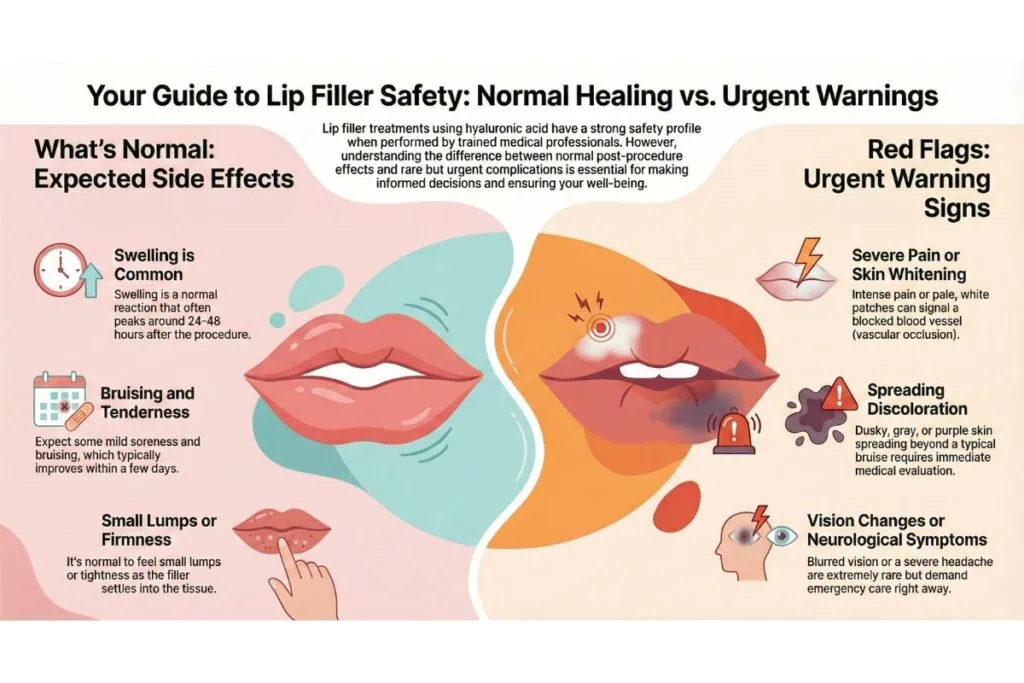
Normal, expected effects
These are common and typically improve within days:
- Swelling (often peaks at 24–48 hours)
- Bruising (more likely if you bruise easily or took certain supplements)
- Tenderness or mild soreness
- Small lumps/firmness that soften as swelling settles
- Dryness or tight feeling in the first few days
In Phuket, swelling can feel more noticeable if you’ve had sun exposure, salt-heavy meals, late nights, or alcohol. Hydration, gentle cooling (not ice directly on skin), and sleeping slightly elevated may help support comfort.
Warning signs
Contact the clinic urgently, or seek emergency care, if you experience:
- Severe or escalating pain that feels out of proportion
- Blanching or whitening of the skin, or patchy pale areas
- Dusky, gray, or purple discoloration spreading beyond typical bruising
- Coolness of the skin or a sharply defined area of color change
- Blisters, skin breakdown, or worsening texture changes
- Vision symptoms (blurred vision, eye pain), severe headache, or neurological symptoms
These can be warning signs of vascular compromise, including vascular occlusion filler complications, which require immediate medical evaluation.
The rare risks everyone should know about
Even with excellent technique, rare complications can occur. The goal is not fear, but clarity.
1) Vascular occlusion (blocked blood flow)
Vascular occlusion happens when filler enters an artery or compresses a vessel, reducing blood supply to tissue. Without rapid treatment, it can lead to skin injury and, in extremely rare cases, vision-threatening events.
A detailed medical review on the mechanism of severe events linked to vascular injection can be found on PubMed Central: PubMed Central
2) Infection
Infection is uncommon but possible with any injection procedure. Risks may rise with:
- Touching lips frequently
- Poor aftercare hygiene
- Recent dental work close to treatment time
- Existing skin infections around the mouth
Warning signs include increasing redness, warmth, swelling that worsens after day 2–3, fever, or pus-like discharge.
3) Herpes simplex flare (cold sore reactivation)
If you have a history of cold sores, the injection process can sometimes trigger a flare. This is not a “filler allergy,” but a viral reactivation. Let your clinician know your history during consultation.
4) Delayed inflammatory reactions or nodules
Occasionally, lumps or swelling appear weeks later. These may be inflammatory, sometimes related to immune triggers. Evaluation is important to guide safe care.
Vascular occlusion filler: the key warning signs and what to do
This is the complication patients hear about most, and for good reason: it is rare, but time-sensitive.
Early signs that require urgent assessment
- Sudden, intense pain during or soon after injection
- Blanching (whitening) or mottled pale patches
- Livedo pattern (net-like discoloration)
- Cool, numb, or unusually tight area
- Rapidly evolving color change that does not match normal bruising
A comprehensive clinical overview of filler complications and relevant anatomy is available here:
PubMed Central
What to do if you suspect a serious complication
- Contact your provider immediately (do not wait until morning if symptoms are progressing).
- If symptoms are severe, spreading, or involve vision changes, go to emergency care right away.
- Avoid home “hacks” or massage methods from social media. Wrong interventions can worsen tissue stress.
At Siam Clinic, patients are always advised to keep post-treatment communication open, especially in the first 48 hours. Dr. Phimphakarn
How to reduce lip filler risks before you book
Safety is built before the needle ever touches skin.
Choose medical standards, not just aesthetics
Ask:
- Who performs the procedure and what medical training they have
- What emergency protocols exist for rare complications
- How the clinic handles after-hours concerns
Share your medical history honestly
Important points include:
- Past cold sores
- Bleeding disorders or easy bruising
- Autoimmune conditions or immune-suppressing therapies
- Recent dental work or planned dental procedures
- Prior filler history and any past reactions
Be cautious with “pre-treatment blood thinners”
Many people do not realize that certain supplements can increase bruising risk (for example, high-dose fish oil or vitamin E). Always ask your clinician what is appropriate for you. Never stop prescribed medications without medical guidance.
Plan timing around travel and Phuket lifestyle
If you’re arriving from a long-haul flight or planning beach clubs and sun exposure:
- Consider treating early in your trip
- Allow a few days for swelling to settle
- Avoid sunburn, alcohol, and intense workouts right after treatment
Aftercare that supports a smoother result
A refined result is often the combination of technique plus smart aftercare.
Common recommendations (may vary by individual):
- Keep the area clean and avoid touching lips unnecessarily
- Avoid heavy exercise for 24–48 hours
- Avoid high heat exposure (sauna, very hot yoga) early on
- Sleep slightly elevated the first night
- Stay well hydrated, especially in tropical climates
Avoid these early on:
- Aggressive lip massage unless instructed by your clinician
- At-home devices or unregulated “needle-free” methods
- Long sun sessions if you’re already swollen
If you have a planned island-hopping schedule, it may help to book a brief follow-up check before you head out.
Who is a good candidate, and who should pause?
Lip filler can be appropriate for many adults seeking subtle enhancement, but postponing is often the safest choice if you have:
- Active infection near the mouth
- Uncontrolled medical conditions
- Recent major dental infection or ongoing dental treatment
- A history of severe allergic reactions (requires careful medical evaluation)
A personalized consultation matters more than any “one-size” guideline.
FAQ
1) Is lip filler safe for first-timers?
For most healthy adults, lip filler can be safe when performed by trained medical professionals using appropriate product and technique. First-timers often benefit from conservative dosing and a staged approach.
2) How common is vascular occlusion with lip fillers?
Vascular occlusion is considered rare, but it is one of the most important risks to understand because it requires immediate care. Risk depends on anatomy, technique, and injector experience.
3) How do I tell bruising from a serious problem?
Bruising is typically purple or blue and improves gradually. Warning signs include severe pain, white or dusky discoloration, cool skin, or rapidly spreading changes. When unsure, it is safest to contact your provider promptly.
4) Can lip filler cause blindness?
Vision-threatening events are extremely rare, and are linked to accidental injection into blood vessels that connect to the eye circulation. This is why medical standards, anatomy knowledge, and safety protocols matter.
5) What should I avoid after lip filler in Phuket?
In the first 48 hours, try to avoid heavy alcohol intake, excessive heat exposure, and intense workouts. Sunburn and dehydration can make swelling feel worse.
6) When should I contact the clinic after treatment?
If you have concerns that feel unusual, it is appropriate to ask. Contact urgently for severe pain, blanching, spreading discoloration, blisters, fever, or any vision symptoms.
Recommended Next Reads
- Lip Filler Trends 2026: Russian Lips & more
- Lip Filler Explained: Natural Results, Longevity, and Safety
- Lip Filler vs Lip Flip: Which Gives a More Natural Look?
Sources
- FDA: General Issues Panel Meeting on Dermal Fillers
- PubMed Central: Facial fillers, relevant anatomy, injection techniques, and complications
- PubMed Central: Cerebral embolism and severe vascular events related to facial filler injections
- PubMed Central: Pathophysiology and mechanisms of HA filler complications
If you’re visiting Phuket and considering lip enhancement, Siam Clinic can support a calm, natural-looking plan with a doctor-led assessment, clear safety discussion, and aftercare guidance that fits your travel schedule.
Written by: Siam Clinic Editorial Team
Last updated: 23 January 2026
Medical Disclaimer
- This article is intended for educational and informational purposes only.
- It does not replace personalised medical advice, diagnosis, or treatment.
- Clinical decisions should always be made in consultation with a qualified healthcare professional.
Learn more about how we create and maintain medical content:
Medical Content Policy