
If you’re planning a “liver detox,” it helps to start with a more accurate definition. Your liver already detoxifies every day, filtering and transforming substances so they can be safely removed through bile, urine, and stool. What most people mean by liver detoxification is a short reset that reduces everyday burdens (alcohol, ultra-processed foods, excess sugar, dehydration) while emphasizing foods and habits that support liver health.
This approach can be especially relevant when travel routines are disrupted. Whether someone is recovering from a long-haul flight or a late night out in Phuket, the combination of heat, dehydration, salty foods, and alcohol can make you feel heavier and more inflamed than usual. A smart, food-first plan can support energy, digestion, and metabolic wellness, while staying medically responsible.
Anyone looking for supervised wellness guidance during a holiday stay can also explore supportive options at Siam Clinic. → Service
What “Liver Detoxification” Really Means
A common myth is that the liver needs harsh cleanses or special pills to “flush toxins.” In reality, the body’s detox pathways are continuous, and extreme regimens may backfire, especially if they cause dehydration, low calorie intake, or nutrient gaps. The U.S. National Center for Complementary and Integrative Health (NCCIH) notes that many detox and cleanse claims are not strongly supported by high-quality evidence and that some approaches may carry risks.
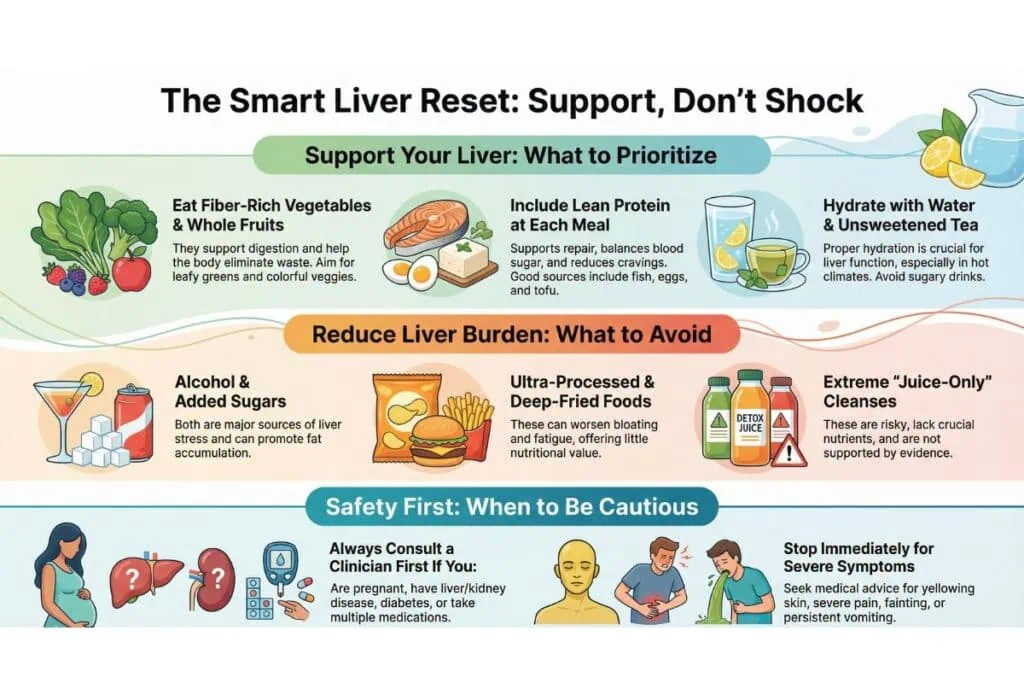
A safer, more effective “detox” preparation is really a liver detox diet focused on:
- Hydration and electrolytes (especially in tropical climates)
- Fiber and plant nutrients to support digestion and bile flow
- Lean protein to support repair and metabolic balance
- Reduced alcohol and added sugars to lower fat accumulation in the liver
- Consistent sleep and gentle movement
Who Should Be Cautious Before Starting Any Detox Plan
A food-based reset is generally safe for many people, but it’s wise to check with a clinician first if you:
- Have known liver disease, kidney disease, diabetes, gout, or digestive disorders
- Are pregnant or breastfeeding
- Take blood thinners or multiple long-term medications
- Have a history of eating disorders
- Have unexplained fatigue, yellowing of eyes/skin, severe abdominal pain, or dark urine
In these cases, “detox symptoms” could reflect something unrelated, and timing matters.
The Best Foods for a Liver Detox Diet
Think “Mediterranean-style” patterns: plants, fiber, healthy fats, and steady protein. This pattern is often recommended for metabolic liver health, including fatty liver risk reduction.
1) Fiber-forward vegetables (aim for 2–3 cups daily)
Vegetables support gut transit, which helps the body eliminate bile-bound waste products.
Great choices
- Leafy greens (morning glory, spinach, romaine)
- Cruciferous vegetables (broccoli, cauliflower, cabbage)
- Colorful options (bell peppers, carrots, tomatoes)
Travel-friendly tip in Phuket: Order stir-fried greens with garlic, grilled fish, and steamed rice rather than deep-fried dishes.
2) Low-sugar fruits and polyphenol-rich picks
Fruit is not the enemy, but a “detox” week is a great time to avoid fruit juice and focus on whole fruit.
Great choices
- Berries (high in polyphenols)
- Citrus (whole segments, not juice)
- Guava, kiwi, or dragon fruit in moderate portions
3) Lean protein at each meal
Protein supports repair and keeps blood sugar steadier, which can reduce cravings that derail detox plans.
Great choices
- Fish and seafood, eggs, tofu, tempeh
- Yogurt or kefir (if tolerated)
- Lean poultry
4) Healthy fats
Healthy fats support satiety and may help metabolic markers when paired with fiber-rich foods.
Great choices
- Olive oil, avocado
- Nuts and seeds (small handful)
- Fatty fish (salmon, sardines)
5) Whole grains and legumes
These support gut health and help reduce reliance on snacks.
Great choices
- Oats, brown rice, quinoa
- Lentils, chickpeas, beans
What to Drink Before and During Liver Detoxification
In tropical climates like Thailand, dehydration can accelerate faster than you expect, especially after beach time, sauna sessions, or nights out. Hydration is not just about water, but also minerals.
Best options
- Water (consistently throughout the day)
- Oral rehydration style fluids when sweating heavily (especially after outdoor activities)
- Unsweetened herbal tea (ginger, chamomile)
- Black coffee in moderation can be fine for many people, but avoid turning it into a dessert drink
What to limit or avoid
- Fruit juice and sweetened drinks
- Energy drinks
- “Detox teas” that act like laxatives or diuretics (they can worsen dehydration)
Foods and Habits to Avoid
1) Alcohol
If your goal is liver support, alcohol is the clearest lever. Even short breaks may help reduce inflammation and improve sleep quality for many people.
If you’re asking, “Can I drink alcohol after detox?”
A good rule is to treat alcohol like a reintroduction, not a reward. More on timing below.
2) Added sugars and sugary beverages
High intake of sugar-sweetened beverages is associated with fatty liver risk, and excess added sugar can promote liver fat storage over time.
3) Ultra-processed, deep-fried foods
These often combine refined carbs, saturated fats, and excess calories, which can worsen bloating and fatigue.
4) Extreme fasting or “juice-only” cleanses
Low-protein, very low-calorie approaches may cause dizziness, headaches, and rebound cravings. They can also be risky for people with blood sugar issues.
A Simple 7-Day “Prep” Plan for Liver Detoxification
This is a practical way to prepare without shock to your system.
Days 1–2: Stabilize
- Eat three balanced meals (protein + vegetables + fiber)
- Reduce alcohol and sugary drinks
- Add 1 extra liter of water across the day
Days 3–5: Clean up and support digestion
- Build meals around vegetables and lean protein
- Add legumes or whole grains once daily
- Keep fruit whole, avoid juices
- Prioritize sleep consistency
Days 6–7: Maintain and assess
- Continue hydration and simple meals
- Add gentle movement (walk after meals)
- Pay attention to how you feel: energy, cravings, bloating, bowel habits
Many visitors in Phuket pair wellness habits with beachside recovery: a morning walk, a light lunch, and an early night often do more for “detox” than any capsule.
Supplements: Helpful, Hyped, or Risky?
Supplements may help fill nutrient gaps for some individuals, but they are not automatically “liver-safe.” Some herbal products have been linked to liver injury, and quality varies widely. This is why a clinician-guided plan matters, especially if someone is taking medications or has abnormal liver enzymes.
A smarter approach:
- Focus on diet first
- Use supplements only when there’s a clear reason (labs, dietary restrictions, clinician recommendation)
- Avoid stacking multiple detox pills at once (this increases risk)
When to Stop: Detox Symptoms That Should Not Be Ignored
Some people report mild changes when they clean up their diet: fewer cravings, lighter digestion, or temporary headaches if they cut caffeine abruptly. However, liver detox side effects should not be used to justify severe symptoms.
Stop and seek medical advice if you experience:
- Severe or persistent vomiting or diarrhea
- Fainting, confusion, chest pain, shortness of breath
- Yellowing of the eyes/skin, intense itching, dark urine, pale stools
- Severe abdominal pain, fever, or signs of dehydration
If you’re unsure, it’s safer to pause the plan and speak with a clinician.
FAQ: Liver Detox Diet, Foods, and Timing
1) How to detox your liver naturally without extreme cleanses?
Start with the basics: reduce alcohol, added sugars, and ultra-processed foods; increase fiber-rich vegetables; prioritize hydration and sleep. These steps support the liver’s normal detox pathways without forcing the body into stress.
2) What are the best foods for liver health during a reset week?
Vegetables (especially leafy and cruciferous), legumes, whole grains, lean protein, and healthy fats such as olive oil and fatty fish. Choose whole fruit over juice.
3) Are liver detox supplements necessary?
Not for most people. Supplements may help specific individuals, but they also carry risks, especially when combined or taken without oversight. Food-first plans are safer and often more sustainable.
4) What are common liver cleanse side effects?
Some people notice changes in digestion, sleep, or cravings when their diet shifts. Severe symptoms are not expected and should be evaluated rather than “pushed through.”
5) How long should I avoid alcohol after detox?
If your goal is metabolic and liver support, consider avoiding alcohol for at least 1–2 weeks after your reset, then reintroduce slowly and mindfully. Results vary by individual.
6) Can a liver detox diet help with fatty liver risk?
A Mediterranean-style eating pattern, gradual weight management if needed, and limiting added sugars and alcohol are commonly recommended strategies for metabolic liver health.
Recommended Next Reads
- Liver Detoxification Explained What Works and What Doesn’t
- Glutathione & Liver Detoxification: What the Research Suggests
- Side Effects of Liver Detoxification: What’s Normal, What’s Not
Sources
- NCCIH: “Detoxes” and “Cleanses” What You Need to Know
- NIDDK: Eating, Diet, and Nutrition for NAFLD/NASH
- PubMed Central: Mediterranean Diet and Nonalcoholic Fatty Liver Disease (Review)
- PubMed Central: Sugar-sweetened beverages and NAFLD risk (Cohort study)
A Gentle Next Step at Siam Clinic
If you’re visiting Phuket and want a liver-friendly reset that fits your travel schedule, Siam Clinic can support you with clinician-guided wellness planning, hydration strategies, and lab-informed nutrition guidance. Results vary by individual, and the safest plan is always the one tailored to your health history, current medications, and goals.
Written by: Siam Clinic Editorial Team
Last updated: 21 January 2026
Medical Disclaimer
- This article is intended for educational and informational purposes only.
- It does not replace personalised medical advice, diagnosis, or treatment.
- Clinical decisions should always be made in consultation with a qualified healthcare professional.
Learn more about how we create and maintain medical content:
Medical Content Policy